Residents question buffer zones and give design input as town moves toward adoption
By Matthew Daldalian, LJI reporter
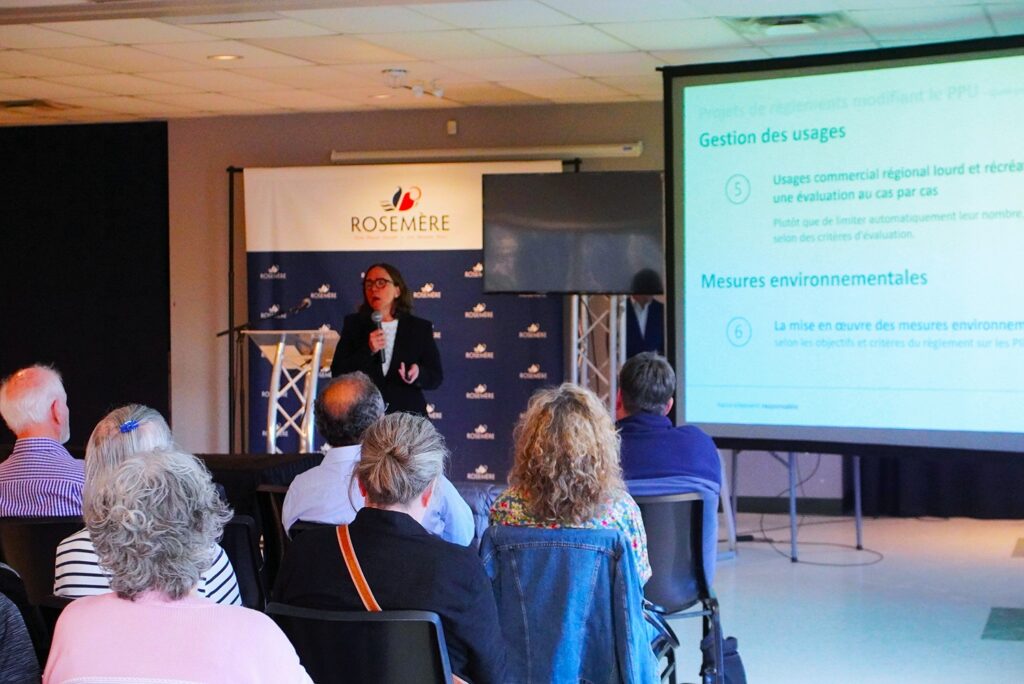
The PPU is outlined for the Place Rosemère sector on April 27 2026. Photo Matthew Daldalian
Town moves toward adoption
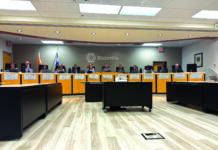
Rosemère is nearing adoption of new urban planning rules for the Place Rosemère sector, as residents weighed in on issues concerning quality of life, design input and environmental protections during a formal public consultation on April 27.
The consultation focused on concordance bylaws tied to the town’s Plan particulier d’urbanisme (PPU) for the regional hub, adopted in October 2025, which plans out a long-term vision to redevelop the commercial hub into a mixed-use neighbourhood.
Addressing attendees in French, Mayor Marie-Élaine Pitre said the meeting marked a required step in the process.
“This evening, we are taking an important step, the official public consultation meeting required by law,” she said.
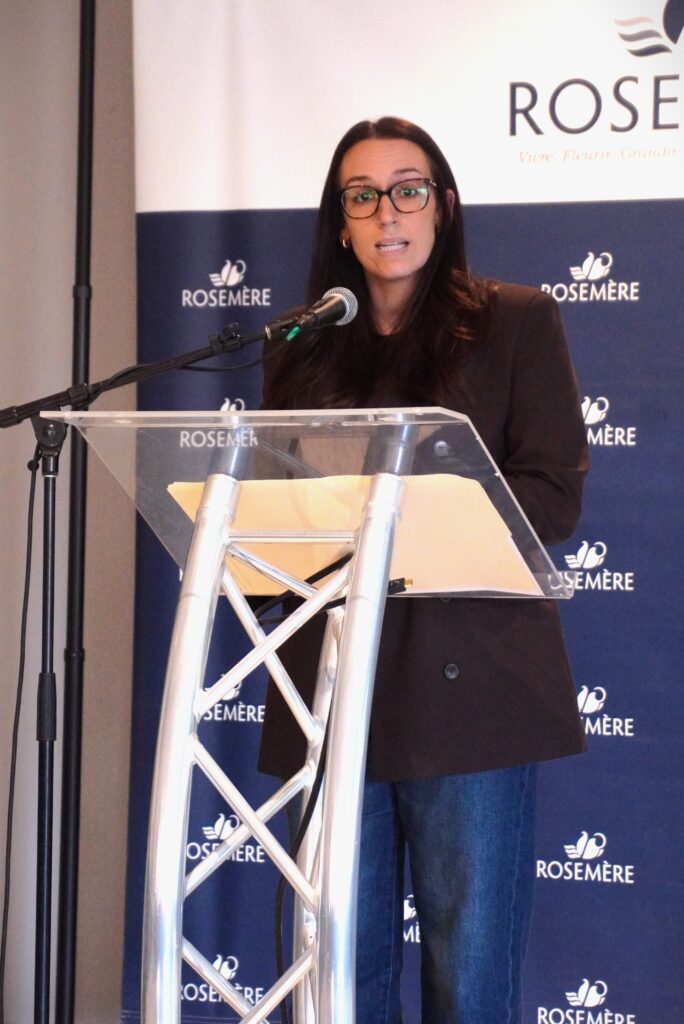
Rosemère Mayor Marie-Élaine Pitre speaks during a public consultation on April 27 2026. Photo Matthew Daldalian
She made note that the PPU itself would not be reopened, and that the discussion was limited to how the vision would be implemented through zoning and regulatory changes.
From commercial hub to mixed district
The redevelopment plan aims to transform large parking areas into a more complete urban environment while maintaining Rosemère’s identity as a green, active municipality.
The site is divided into three zones: an urban sector allowing medium-density housing and local businesses, a central commercial area anchored by the existing mall and a mixed-use sector where higher-density development is planned.
The bylaws introduce rules on building height, land use, design and environmental performance. They also include incentive zoning, allowing developers to build higher in exchange for public benefits such as infrastructure or additional affordable housing.
The bylaws would require 10 per cent of housing units to be affordable, social or family housing, depending on the sector, with some requirements met through built units and others potentially through financial contributions.
The project also includes a target of at least 30 per cent green space, along with requirements to reduce surface parking and integrate sustainable design measures.
Residents want earlier involvement
For Joanne Lafond, a longtime Rosemère resident with a background in architecture, the consultation process is a step forward but still limited.
“I liked that they prepared us for this consultation by holding another meeting in March,” Lafond said in a French interview.
She said the process remains focused on what developers are allowed to do rather than what residents want the area to become.
“What I’m missing is what I want being put forward, what it could look like,” she said. “I want to dream about this place together, not just developers with their imagination.”
Lafond suggested involving architects, students and residents earlier in the process to explore ideas such as different housing types, green roofs and public spaces.
“Everyone has their expertise, their experience,” she said. “Let’s put that to use.”
Concerns over highway proximity
Other residents focused on more immediate planning issues, particularly the proximity of future housing to Highway 640.
Gianni Biagioni, an architectural designer and professional who has followed the project since its early stages, said the proposed 15-metre setback from the highway is insufficient.
“You’re too close to the highway,” he said. “There are sound issues, there is quality of life, health wise.”
Under the proposed rules, sensitive uses such as housing would have to meet a maximum noise level of 55 decibels, with developers required to show mitigation measures where needed.

Gianni Biagioni, an architectural professional, attended the consultation and raised concerns about highway proximity and urban design on April 27 2026. Photo Matthew Daldalian
Biagioni said those measures do not address the eventual impacts.
“They’re all good principles, but they’re like the reactionary solutions,” he said. “It confines people to their apartments.”
He argued that the setback should be at least 30 metres, while saying studies suggest larger green buffers for filtering noise and pollution.
Street design and livability
Biagioni also raised concerns about street design within the future neighbourhood, particularly as the area transitions from a shopping centre to a residential district.
He said wider streets would allow for sidewalks, cycling infrastructure, greenery and traffic flow, reflecting the needs of a complete neighbourhood rather than a retail complex.
At the same time, Biagioni believed building height is less important than land use.
“The land coverage is something that’s more important to me than actual height,” Biagioni said, suggesting that taller buildings with smaller footprints could preserve more open space.
Town signals limited changes
Following the consultation, Pitre believed the process has been well received by residents.
“I think people feel that we are listening to them,” she said in a French interview with The Laval News.
She said the town had already reviewed submitted briefs and would consider feedback before final adoption.
“What impresses me is the work behind all these briefs, how hard our population works to provide relevant comments,” she said.
However, she indicated that major changes are unlikely.
“I do not believe there will be major changes following today’s consultation,” she said.
The town now expects to adopt the bylaws as early as May, with an initial goal said to have been in June.
What comes next
Once adopted, the bylaws will guide how developers can propose projects in the sector. Any proposal will need to meet zoning requirements and pass through a design evaluation process based on objectives such as sustainability, mobility and integration with surrounding neighbourhoods.
The project is expected to unfold over the coming years, beginning with large-scale planning of each sector before individual building permits are issued.
For residents, the consultation highlights an ongoing question: how to balance new housing and economic development with concerns about livability, environmental impact and community identity.
As Rosemère moves closer to formal adoption, the next phase will determine how those competing priorities are reflected in the built environment.