Home Blog Page 101

North Shore goes red

0
North Shore goes red

Dimitris Ilias
In a widely anticipated press conference on Monday the 28th of September, premier Legault announce what everyone feared. An increase in cases that merited passing to red level of alert for Montreal Laval, Quebec City and unfortunately for most of the North shore towns including the MRCs of Rivière-du-Nord, Deux-Montagnes and Thérèse-De Blainville.
Once more the restaurant, bar and entertainment sector are hit by a 28 day closure that starts on October 1st and finishes on October 28th. Premier Legault announced that maintaining or not he red alert after the 28th of October will depend on whether or not the cases drop. The government is also cracking down on private gatherings which seem to fuel the Covid-19 cases as of late.
It is characteristic of the severity of the measures that even though the democratic right of protest is maintained, outdoor protesters (Including anti-maskers) must wear a mask and keep the 2 meters distance between them.
Premier Legault announced that his government will support the businesses most hit by the new measures promising financial help to restaurants, bars and entertainment venues.
Measures in force
At home (houses and cottages), visitors from another address are prohibited with the exception of: a single visitor from another address for single individuals, informal caregivers, individuals offering services or support, labor for planned work.
For the CHSLD, RPA private seniors’ residence and RI, visits for humanitarian purposes are allowed as well as visits by informal caregivers (one person at a time and a maximum of two people per day in CHSLDs)
All private gatherings are prohibited as well as activities organized in a public place except for places of worship and funerals (maximum of 25 people and a register must be kept)
To avoid the spread of the virus to different color-coded regions, inter-regional travel is not recommended toward a green, yellow or orange zone and outside Québec (except for essential travel, workers, shared custody, freight transportation)
As far as public venue halls and audiences in indoor public places, auditoriums, cinemas, theatres, libraries and museums are closed.
Restaurants and dining rooms are closed with delivery and takeout orders only. Bars, brasseries, taverns, casinos will all be required to close.
Businesses, stores and boutiques remain open and private professional and health services are open only for services that require an individual’s presence
Services are maintained for personal and beauty care services as well as community organizations

North Shore situation
Due to the changes in alert levels announced by the Premier of Quebec, particularly in the Laurentians region, Dr. Éric Goyer, Regional Director of Public Health, answered questions from the media during a press conference on Tuesday September 29. Dr. Goyer stated that the hardest hit MRC was Rivière-du-Nord followed by Thérèse-De Blainville. Although travel between orange, yellow and red zones is discouraged, for the moment it is not forbidden and there will be no police presence or enforcement.
NSN asked whether we know where transmission is higher and if we do why not concentrate the measures there rather than closing all the restaurants. Dr. Goyer said that the idea is to limit social gatherings whether it is in the houses or deciding to go out with others to a restaurant thus creating the possibility of transmission. What worries health authorities is the tendance for a rise in the cases. Even though it is the young people getting infected who can fight off the virus, the authorities are proactive in preventing a potential explosion of transmissions to more vulnerable Quebecers overwhelming our health system.

Canadian situation
Unfortunately, Quebec, once more leads in cases closely followed by Ontario and in lieu of an in-person update to the media, Dr. Theresa Tam, Canada’s Chief Public Health Officer, issued a statement on September 28th announcing 153,125 cases of COVID-19 in Canada, including 9,268 deaths. 86% of people have now recovered. Laboratories across Canada continue to test at a high rate, with an average of almost 70,000 people tested daily last week and 1.4% of these testing positive. As of Friday September 25th, an average of 1,175 cases were being reported daily across Canada over a seven-day period. The ongoing increase in Canada’s daily case count is an indicator of accelerated epidemic growth in some regions of this country. While Canadians and public health authorities alike are rapidly responding to the COVID-19 pandemic, Dr. Theresa Tam asked Canadians to be mindful about the fact that we are in the midst of an “infodemic.” That is an overabundance of information about COVID-19, including rumors and misinformation, sometimes deliberately spread.
During any public health crisis, access to reliable, accurate and timely information is essential to protect our health. This is being recognized today by the United Nations Educational, Scientific and Cultural Organization (UNESCO) on the International Day for Universal Access to Information (IDUAI).
Public health officials across Canada have been working tirelessly to provide Canadians with the information they need to protect themselves and their families from COVID-19. She urged Canadians who have been eager to absorb as much info about the virus as possible to consult trustworthy information about COVID-19 in the Government of Canada website, Canada.ca/coronavirus. Provincial and local health agency websites, as well as international agencies like the World Health Organization and the Red Cross are places with trustworthy scientific information about the virus and the pandemic it causes.

Advisory – Recall of counterfeit Zytec Germ Buster Hand Sanitizer

0
Advisory – Recall of counterfeit Zytec Germ Buster Hand Sanitizer

Summary
Product: Counterfeit Zytec Germ Buster Hand Sanitizer 1L (labelled with NPN 80015625, lot number 3329733126).
Health Canada is informing Canadians that the distributor Northern National Sales Inc., was found to be selling a counterfeit version of the Health Canada authorized hand sanitizer Zytec Germ Buster (NPN 80015625).
Counterfeit products are fraudulent versions of authentic products and may be potentially harmful if used or consumed. Health Canada is committed to stopping the production and import of counterfeit drugs in Canada and will not hesitate to take additional actions as necessary to stop this illegal activity. The Department has directed Northern National Sales, Inc. to recall the counterfeit product from the market and the company has confirmed that it is no longer selling it.
Health Canada worked with the authorized license holder, Empack Spraytech Inc., to verify that the product bearing the lot number 3329733126 in a 1L format is counterfeit.
The counterfeit product is packaged in a 1L format with a black and white label which displays the same name, the same NPN (80015625) and the same lot number (3329733126) as the authorized product.
The authorized Zytec Germ Buster Hand Sanitizer bearing the lot number 3329733126 and NPN 80015625 has a color label and is only available in a 3.78L format.
Counterfeit products may contain ingredients not listed on the label, dangerous additives or other contaminants. In addition, they may not contain the active ingredients Canadians would expect them to contain. Since the counterfeit Zytec Germ Buster Hand Sanitizer is unauthorized and made with an unknown formulation, it may not be effective at killing bacteria and viruses, and may pose serious risks to health.
For more information regarding Health Canada’s approach to counterfeit health products please consult Health Canada’s Policy on Counterfeit Health Products.
Should Health Canada become aware of continued sales by Northern National Sales, Inc., of counterfeit or any other unauthorized health products that may pose a risk to Canadians, the Department will not hesitate to take immediate and appropriate action.
What consumers should do
· If you have this counterfeit product, stop using it.
· Consult your healthcare practitioner if you have used this counterfeit product and have concerns about your health.
· Keep all hand sanitizers out of the reach of children.
· If this product is swallowed, call a poison control center or get medical help right away.

Alcohol causes a head-on collision on the A640

0
Alcohol causes head on collision on the 640

A driver, presumably in a state of intoxication, caused a head-on collision on Saturday afternoon after traveling in the opposite direction on an access road of the Highway 640 west, in Sainte-Thérèse, in the Laurentians.
The accident happened around 4:15 p.m. when the woman lost control of her vehicle, which ended up in the opposite direction on the highway 640 west ramp leading to Boulevard Curé-Labelle north. A vehicle came at the same time and could not avoid the frontal collision.
“The woman was arrested on the spot for impaired driving causing injuries,” Sergeant Claude Denis of the Sûreté du Québec (SQ) stated, adding that blood samples were requested.
The lady suffered non-life threatening injuries, according to the SQ. A passenger in the back of his vehicle was not injured, and neither was the driver of the other vehicle.
The ramp was closed to traffic to allow investigators to do their job.

The environment, a priority for Rosemère

0
The environment, a priority for Rosemère

Rosemère has always shown leadership in environmental protection. It enjoys an enviable position, particularly with respect to the development of its green spaces and the protection of its natural environment. In recent months, despite the current health issues, the Town has spared no effort to pursue its mission of providing Rosemerites with an outstanding living environment.
On April 6, in order to pursue the revitalization of Miller Marsh, recognized since 2011 as a site of ecological interest to be protected, the Éco-Nature organization, with the financial support of the Town of Rosemère, acquired the last private property that provides access to the site. This land was then transferred to the Town of Rosemère for conservation purposes in perpetuity. This comes as excellent news for the community, as this small but so very precious haven of peace will be restored on an ongoing basis so that future generations will still be able to admire this natural space with its wealth of biodiversity.
In June, Rosemerites had the opportunity to participate in the very first Forum on the Environment, an initiative of the Civic Committee on the Environment. In a completely virtual way, nearly one hundred participants took part in interactive videoconferences on the concept of zero waste, natural environments and biodiversity.
And lastly, in July, in addition to now offering financial assistance of up to $40 to female residents of Rosemère who wish to purchase sustainable feminine hygiene products, Town Council adopted a resolution to ensure the sustainability and conservation of the Frères du Sacré-Coeur forest, woodlands located behind the Externat Sacré-Coeur belonging to Rosemère. This land has a hickory maple grove of unique forest value for which we will conduct an ecological analysis to assess its full worth. This land was the subject of volunteer planting of 600 trees in 2019 in order to revitalize its forest cover. Today, we are proud to note that the residents’ planting efforts have achieved a success rate of more than 90%.
Finally, on September 14, Rosemère adopted resolutions to concretely pursue its vision of preserving its green spaces with high ecological and environmental potential. The Town is applying for financial assistance from the Communauté métropolitaine de Montréal (CMM) under its Trame verte et bleue program to eventually acquire the private land known as the Grand-Côteau forest. This private land is currently zoned residential and is the subject of real estate development applications. Concretely, the Town wishes to obtain the legal and financial resources to preserve this woodland from any development. The objective of this action is to extend this metropolitan forest corridor recognized by the CMM, just as the City of Lorraine did recently.
“All these actions are directly in line with our strategic vision adopted in 2018: Rosemère, a proud, green and prosperous city. We can say that we are proud to develop an approach of dialogue and proximity with our residents in large-scale projects, as we have recently done with our urbanistic vision. We are also proud to continue to innovate in order to make our community ever greener through concrete initiatives. For Rosemère, the environment is an invaluable community asset. We have always focused our decisions on maintaining our living environment at the heart of our priorities, in order to preserve the outstanding living environment that we all share,” stated Eric Westram, Mayor of Rosemère.

1$ per household for biodiversity in Rosemère

0
Rosemère announced its contribution to the Fonds des municipalités pour la biodiversité

Rosemère announced its contribution to the Fonds des municipalités pour la biodiversité (Fonds MB), an initiative of the Québec chapter of the Canadian Parks and Wilderness Society (CPAWS Québec) and the Fondation de la faune du Québec. With this commitment, the Town is once again taking concrete action to fight climate change and the loss of biodiversity on its territory.
By participating in the Fund, the Town has pledged to contribute the equivalent of $1 per household per year to the Fund—an amount that represents $5,251 for 2020. This amount will be increased 100% through the contribution of Québec’s Ministère de l’Environnement et de la Lutte contre les changements climatiques. The amounts deposited in the Fund are therefore cumulative and reserved for small or medium-size territory conservation projects or wildlife habitat protection projects that will be carried out in Rosemère.
“By becoming a member of the Fonds des municipalités pour la biodiversité, the Town of Rosemère is taking a concrete step to increase its resilience in the face of climate change, which is causing a loss of biodiversity on our territory. As a municipality, we recognize the importance of protecting our environment, and have done so for many years. Protecting biodiversity is part of this commitment to our future generations to provide them with an environment that is always good to live in. We are proud to be a member of the Fonds des municipalités pour la biodiversité (the Municipal Biodiversity Fund), which will enable us to carry out environmental projects in the coming years,” stated Rosemère Mayor Eric Westram.
“Municipalities play a leading role in implementing concrete solutions to address the biodiversity crisis and fight climate change. By becoming one of the first municipalities to join this Fund, Rosemère is still present, present for the future,” stated Isabelle Bérubé, Director of Development for the Québec chapter of the Canadian Parks and Wilderness Society (CPAWS Québec).
About the Fonds des municipalités pour la biodiversité
The Fonds des municipalités pour la biodiversité (Fonds MB) is intended for municipalities that want to build capacity to fight climate change and biodiversity loss.
The Fund is an initiative of the Québec chapter of the Canadian Parks and Wilderness Society, in partnership with the Fondation de la faune du Québec. Supported by the Ministère de l’Environnement et de la Lutte contre les changements climatiques, the Fund aims, in particular, to protect natural spaces in urbanized areas.
Each member municipality therefore pledges to contribute $1 per year per household to a fund reserved for it, which will enable it to accumulate the funds needed to carry out projects to protect natural environments and therefore biodiversity as well.

New address for the screening and assessment clinic in Boisbriand

0
New address for the screening and assessment clinic in Boisbriand

The Integrated Health and Social Services Center (CISSS des Laurentides) is informing the population of the change of address of the designated assessment and screening clinic in Boisbriand.

Starting September 28, medical appointments for screening and evaluations related to COVID-19 will be at 610 boulevard Curé-Boivin, in Boisbriand. The hours of operation remain the same, Monday to Friday, 8 a.m. to 8 p.m. and 8 a.m. to 6 p.m. on weekends.
Although all screenings by appointment will be transferred to the new address as of
September 28, the old location on rue Ambroise-Lafortune will continue for two weeks to
receive people without an appointment in order to facilitate the transition.
Ms. Rosemonde Landry, President and CEO of the CISSS des Laurentides indicates that everything has
been done so that the move has no impact on the screenings. “Since the site of
the first clinic was increasingly well known to the population, it was important to plan a period for the
transition so that this change would go smoothly. The Boisbriand screening clinic receives
more than 700 people per day, with and without an appointment,” she explained.

The new clinic location will bring together three services: the medical assessment, the
screening clinic and the appointment center. From reception to screening, the user’s route has
been designed to facilitate travel and ensure the safety of the population and staff.

When to take a screening test
People who have been in contact with a positive case, who have symptoms of COVID or
for whom screening is requested by public health are invited to complete the self-assessment form
on Québec.ca / decision COVID19. If screening is recommended, the person will be
directed to the appointment center, by phone or via the online application which is now
available on the CISSS des Laurentides website.
All information on screening and making an appointment is available on the
CISSS des Laurentides website at www.santelaurentides.gouv.qc.ca, section COVID-19. The CISSS des
Laurentides reiterates the importance of carrying out frequent hand hygiene, wearing a mask and
maintaining social distancing.

Relocation of home support services from CLSC Jean-Olivier-Chénier

0
Relocation of home support services from CLSC Jean-Olivier-Chénier

The Integrated Health and Social Services Center (CISSS des Laurentides) is informing citizens that home support services (SAD ) of the CLSC Jean-Olivier-Chénier, located at 29, chemin d’Oka in Saint-Eustache, will be offered in new premises, starting Monday, October 5.

The new space will be designed to accommodate all home support services, including the
loan of equipment. To facilitate the transition, it was possible to keep the same telephone number,
450 491-1233. The new coordinates of the SAD will be as follows: 59, boulevard Industriel in
Saint-Eustache. It will always be necessary to make an appointment with the service equipment loan before traveling. In anticipation of the move, this service will also be closed on October 1 and 2, 2020.

“The full capacity of employees at CLSC Jean-Olivier-Chénier having been reached, our organization had to find a new building to offer an optimal work environment, as well as an adequate and safe arrangement for the service of equipment loans. The new home support facilities will be adapted to meet the needs of our workers, who will be able to continue to offer quality care and services to customers, ”said Rosemonde Landry, President and CEO of the CISSS des Laurentides.

ARE THE NASAL PCR TESTS FOR SARS-2-CoV TOO “SENSITIVE”? Dr. Karatzios clarifies

0
At CNN, there was a headline in the ticker tape that turned heads and spread like a virus in all sorts of conspiracy web pages.

Dimitris Ilias

A lot of commotion in the news lately concerning tests. The good news is that newer and faster tests are being developed with a saliva gargle test on the verge of approval in BC.
At CNN though, there was a headline in the ticker tape that turned heads and spread like a virus (pardon the pun) in all sorts of conspiracy web pages. “Health experts warn Covid-19 tests aren’t just slow, they’re too sensitive”. NSN reached out to Dr. Christos Karatzios Assistant Professor of Paediatrics at the Montréal Children’s Hospital for a much-needed clarification.
The doctor started by saying that people didn’t understand what they were reading and of course they told him that positive tests are “false positives”.

Nasal Tests too sensitive? Dr. Karatzios says: They have to be!


His answers are all here:
Yes, the tests are sensitive. They HAVE to be. They pick up genetic RNA material of SARS-2-CoV in your nose.
No, the tests do not pick up false positive results. The nasal PCR test for SARS-2-CoV ONLY DETECTS SARS-2-CoV and nothing else. So, it doesn’t pick up “other coronaviruses”.
The false positive rate is extremely low and mostly has to do with lab error (i.e. contamination with a positive sample in the lab). This is very rare.
The false negative rate is much higher due to various factors (i.e. sampling error – not getting the swab deep enough in the nasal passage, or sample timing – too early in the disease or too late).
The test is a “YES” or “NO” test for the presence of the virus. It tells you nothing about live (growable and infectious virus), or dead remnant pieces of the RNA (therefore not infectious virus).
Someone can remain positive for weeks as many of my friends reading this have. Some have stayed positive for 6 weeks. It does NOT mean they are contagious all these weeks.
Immune suppressed people and people with severe COVID-19 (in ICU on a ventilator etc), may be contagious for 3-4 weeks.
For the rest of the healthy population (i.e. children in school) who got COVID-19, live infectious virus stops shedding after about 10 days. Your test can still pick up genetic pieces after this but the virus is dead.
A quick hint: do you have fever and a bad cough and diarrhea? You’re contagious until all gone. You were contagious 1-2 days before it all started.
A PCR is a test that checks for the genetic material and, if present, enzymes in the test start making copies of the genetic material until we are able to detect it. The checking happens in cycles. The less cycling needed to detect, the more genetic material that exists in that swab and so the Ct (cycle threshold) is LOW. The less genetic material that exists in the swab, the higher is the Ct.
This is NOT a viral load. It does not give you a number of copies of the virus per mL of snot or per nasal surface cells in your nose. This is the major mistake many papers and scientists are making.
A viral load has a curve – so therefore it rises 📈 and it falls 📉. Scientists can only presume that with the current PCR test the Ct rises and falls too. But a viral load curve needs a denominator to be constant and that is the sample. In HIV we know the viral load of a patient because we sample a constant blood volume. For a respiratory virus like SARS-2-CoV, it depends on the sample and this isn’t constant as many of you who have had the test done know – you thrash about because it’s uncomfortable and there may be less cells in the nasal swab. Or the testing person samples the front of the nose where the virus doesn’t live well when compared to the back of the nose. There is no constant denominator unlike a blood test – and we don’t have those developed for this pandemic.
Unlike flu (300 viral particles in droplets but 3 if airborne), Shigella causing shigellosis and dysentery (1-10 bacteria), and Salmonella causing typhoid fever or other salmonellosis diarrheal illnesses (100-200 bacteria) we do NOT know the infective dose of the SARS-2-CoV.
So, even if we knew the viral load of the test we would not know what it meant. Does it take 1, 10, 10,000 viral particles to cause COVID-19? What about black people who have higher numbers of ACE receptors for the virus, or kids and mild asthmatics who have less? How many viruses are needed to cause disease in them? We just don’t know and we will not know for a while. Remember we are learning as we live. We are building the boat as it is sailing during this pandemic.
Also, what if the viral load is low…can a child return to school let’s say as was suggested by CNN? How do you know if the viral load is on the upswing (early in the disease and the patient is asymptomatic and will have a big viral load in a few hours when he/she becomes presymptomatic) or late in the disease as it has passed?
In conclusion, yes, the tests are sensitive but they are specific for this virus only. If positive we don’t know where you are on the disease timeline unless you have symptoms. Isolation and contact tracing are the only way to control this disease apart from wearing masks, washing hands, and keeping distances. Unfortunately, we can’t predict who can go to school or who can’t. If an outbreak happens based on positive tests, a school may need to fully close. Unfortunately, that’s the limits of our technology. Maybe in a few months we will know more.

A super-busy Thérèse-De Blainville PD

0
Operation OSCAR, for Opération systématisée comportements à risque, aimed to identify the places
where there could be problems concerning the respect of health rules and intervene there.

Dimitris Ilias

The Thérèse-De Blainville police department has been busy as of late. They have engaged in multiple campaigns of public information and fundraising. One of the campaigns is to inform citizens about the dangers of using your cell while driving. Under the headline “Don’t let distractions blind you” (Ne laissez pas la distraction vous aveugler) RIPTB shares important statistics about the large percentages of accidents attributed to distracted driving. Also, the RIPTB participated in a fundraising campaign for the Académie des arts – Trouver ta voie whose mission is the integration and the promotion of artistic skills for people with intellectual or physical disabilities, autism spectrum disorder or attention deficit with or without hyperactivity.

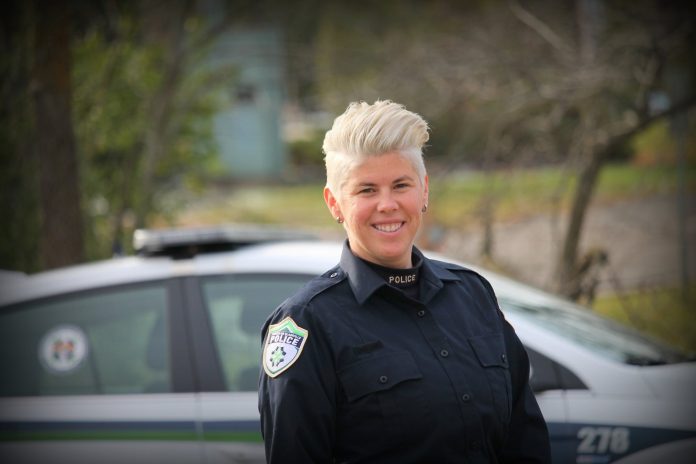
Constable Sébastien Charette is the officer who will be serving as mall’s go to with the RIPTB

A unique partnership
On Wednesday September 16th took place the renewal of the partnership agreement between Place Rosemère and the Régie intermunicipale de police Thérèse-De Blainville, more than fourteen years after the first agreement signed in October 2006.
This partnership continues year after year, responding to a real need for prevention and service for the customers of this large North Shore shopping mall. It makes it possible to offer the services of a police officer from the RIPTB directly on site and to work in collaboration with the security agents of Place Rosemère and the employees of the businesses.
This makes it possible to inform and assist citizens, intervene quickly and effectively with customers and tenants, ensure a presence during special events, implement prevention projects and offer unparalleled service at Place Rosemère.
NSN reached out to inspector Martin Charron who is also handles the department’s PR about the role of the Thérèse-De Blainville PDs officer in the role. He was excited to confirm that in this partnership the dispatched police officer will be training and advising the security personnel of the mall. In many instances, mall security hiring requirements do not even require any training or experience. It is therefore a win win situation since mall security will benefit from the experience of a professional and the RIPTB will be able to serve better in a large busy shopping center that services such a large part of its jurisdiction. Constable Sébastien Charette is the officer who will be serving as mall’s go to with the RIPTB and taking on the crucial of working with the customers, owners and security of Place Rosemère to ensure for a smooth and pleasant shopping experience especially during these trying COVID times.

Partnership agreement between Place Rosemère and the Régie intermunicipale de police Thérèse-De Blainville renewed

Operation OSCAR
The RIPTB joined in this past weekend in Operation OSCAR. Thus, its members alongside police officers from across the province checked whether customers and owners of 1,000 licensed establishments complied with public health instructions. Fines can range from $ 400 to $ 6,000 for violations for both owners and customers. These measures were announced during a press briefing by the Minister of Public Security, Geneviève Guilbault.
Operation OSCAR, for Operation Systematic Behavior At Risk (Opération systématisée comportements à risque), aimed to identify the places where there could be problems concerning the respect of health rules and intervene there.
The police tried to ensure that the rules are followed, as well as the provisions on alcohol permits, which have been modified since the start of the pandemic.
“Every week, we see images in bars, of crowded dance floors. We must nevertheless admit that there are situations of violation of the rules”, said the Minister of Public Security.
To those who still doubt the need to wear the face covering or to respect physical distancing, the message is simple: “Comply”, added Ms. Guilbault. “My colleagues and I have only one goal every day and that is to protect the health of Quebecers and to ensure that society can continue to function. Our measures are not based on any conspiracy and no dictatorial inclination,” said the minister, while hundreds of conspiratorial protesters have roamed the streets in recent weeks to deny the existence of a pandemic.
This operation on a massive scale this past weekend targeted all the places that are at a higher risk to attract customers and potentially break the rules when it comes to COVID protection. With cases of virus infections rising in Quebec, Premier Legault has attributed the problem not to the opening of schools, but rather on instances of gatherings where the rules were not followed and people got complacent thus spreading the virus.
“We will be visible and proactive,” explained before the operation Inspector Martin Charron of the RIPTB communications office. The objective is simple, to avoid a second wave!”
All over Quebec the presence of the police was be very visible during operation OSCAR. The police also took the opportunity to apply the conditions relating to liquor permits, in conjunction with the Régie des alcools, des courses et des jeux.
Bars, restaurants and microbreweries are now prohibited from serving alcohol after midnight, with or without food.
Results
On Monday morning the 21st of September the Thérèse-De Blainville PD announced the results of operation OSCAR. There were 16 visits to establishments this past weekend. 10 general violation reports were issued in two establishments.

COVID-19 Situation in Quebec September 23d 2020

0
As of September 23d 2020

Situation in Québec
The World Health Organization has officially declared COVID-19 a pandemic.

For now, the spread of the coronavirus (COVID-19) is under control in Québec, but the present weeks are critical. Community transmission of the virus now extends to all regions of Québec. The Government is taking all the necessary measures to contain the contagion as much as possible.

The latest data of the evolution of COVID-19 over the past 24 hours in Québec reveal:

582 new cases, bringing the total number of people infected to 69,670.
No new death has occurred in the last 24 hours, but 1 death which has occurred between September 17 and September 22 is added, for a total of 5,810.
The number of hospitalizations increased by 6 compared to the previous day, for a cumulative total of 184. Among these, the number of people in intensive care increased by 1, for a total of 31.
The samples conducted on September 22 amount to 27,303 for a total of 2,164,247.

Weather

Rosemère
light rain
8.7 ° C
9.2 °
7.8 °
84%
3.6m/s
100%
Wed
13 °
Thu
12 °
Fri
12 °
Sat
15 °
Sun
12 °