Home Blog Page 6

Colombian Delegation Visits Deux-Montagnes to Study Stormwater Innovations

0

A group of eight professionals from the metropolitan region of Bogotá-Cundinamarca, Colombia, made a technical stop in Deux-Montagnes on November 12 as part of a knowledge-exchange mission organized by the Communauté métropolitaine de Montréal (CMM). The delegation, representing an urban-planning agency comparable to the CMM, is touring Quebec to study local governance structures and climate-adaptation strategies.

The visit to Deux-Montagnes centred on one of the city’s most ambitious recent infrastructure projects: the open-air stormwater retention basin at Parc Central, combined with a new pumping station and flood-protection dyke system. Together, these installations form the backbone of the municipality’s updated approach to flood mitigation  a pressing issue since the historic inundations that struck the Lake of Two Mountains in 2017 and again in 2019.

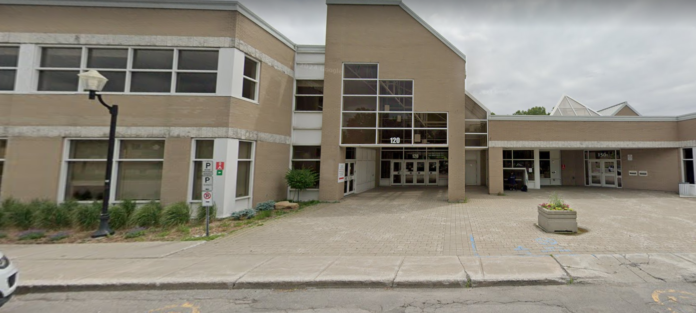
After a briefing at city hall, the Colombian delegation toured the Parc Central site, where municipal staff and CMM representatives outlined the engineering principles behind the open retention basin. The project captures excess rainfall, temporarily stores runoff, and regulates its release, easing pressure on the stormwater network during increasingly intense precipitation events. The system is paired with a modern pumping station on 13th Avenue that can discharge large volumes of clear water into the lake when conditions allow.

What distinguishes the Deux-Montagnes project  and what drew the interest of the South American visitors  is the integration of hard infrastructure with landscape design. The basin was intentionally developed as a multifunctional public space, with walking paths, viewing areas, and permanent water features designed to prevent stagnation. The model reflects an international shift toward “blue-green” stormwater solutions that strengthen resilience while improving neighbourhood livability.

For the CMM, which has been expanding its partnerships with other metropolitan regions, the visit represents a growing appetite for knowledge-sharing on climate adaptation. Bogotá-Cundinamarca has been examining ways to create a forum similar to the CMM’s “Agora métropolitaine,” a platform for cooperation among municipal leaders, planners and environmental specialists. The Deux-Montagnes stop served as an example of how a mid-sized municipality can leverage metropolitan governance to implement large-scale, technically complex projects.

City officials emphasized that the Parc Central infrastructure is already delivering measurable benefits. By combining the retention basin, the dyke and the pumping station, the municipality has significantly increased its ability to manage extreme rainfall and prevent sewer surcharges, challenges expected to intensify in coming decades. The CMM has identified the Deux-Montagnes basin as a model that could be adapted by other flood-prone communities across Quebec.

The Colombian visitors expressed interest in applying similar practices in their own region, where rapid urban growth and climate pressures have heightened the need for integrated stormwater systems. Their Quebec itinerary includes stops in Montréal and Gatineau, focusing on metropolitan governance, planning tools and best practices in sustainable infrastructure.

For Deux-Montagnes, the November 12 visit was an opportunity to showcase a project that has become a reference point within the Greater Montréal area. More broadly, it underscored a trend seen worldwide: mid-sized municipalities, once on the climate-adaptation front lines, increasingly finding themselves at the centre of international exchanges on how to respond to the new realities of extreme weather.

Dr. Éric Goyer Steps Down as Laurentides Public Health Director After 14 Years of Leadership

0

The Laurentides public health authority is preparing for a major transition as Dr. Éric Goyer, one of the region’s most influential health leaders, concludes his mandate after more than two decades of service.

In a statement issued Monday, the Centre intégré de santé et de services sociaux (CISSS) des Laurentides confirmed that Dr. Goyer will step down as Director of Public Health on December 1, 2025, after choosing not to seek a renewal of his mandate.

A Career Marked by Crisis Leadership and Community Commitment

Dr. Goyer has spent over 25 years working in public health in the Laurentides, including 14 years at the helm of the region’s public health department. His leadership became especially prominent during the COVID-19 pandemic, when the region, one of Quebec’s fastest-growing, faced unprecedented pressures on its health system, social services, and vulnerable populations.

Julie Delaney, President and CEO of the CISSS des Laurentides, praised Dr. Goyer’s “remarkable commitment, leadership and dedication,” noting the “colossal” amount of work he carried out during the pandemic and through numerous public health challenges.

“His sense of duty and his unwavering commitment to the well-being of our communities have deeply inspired our teams,” Delaney said.

Beyond emergency response, Dr. Goyer helped strengthen preventive health initiatives, community health outreach, and environmental health strategies—areas that have become increasingly important amid Quebec’s climate-related health concerns and demographic shifts.

Interim Director Named: Dr. Gabrielle Bureau

To ensure continuity, the CISSS announced the appointment of Dr. Gabrielle Bureau as interim Director of Public Health.

Dr. Bureau has served as a medical advisor within the Laurentides public health department since 2018 and brings a strong academic and professional background. She holds:

  • a medical degree,
  • a master’s in community health,
  • and a specialist certification in public health and preventive medicine from Université Laval.

Her work in the region has touched several critical portfolios, including environmental health, emergency preparedness, municipal health planning, COVID-19 response, and climate-change mitigation strategies.

In her interim role, Dr. Bureau intends to “continue the mission” of Dr. Goyer, protecting and improving public health through prevention, promotion, crisis monitoring, and close surveillance of health trends affecting Laurentides residents.

Delaney expressed confidence in her appointment, calling Dr. Bureau a physician of “great expertise” and emphasizing the importance of maintaining momentum in public health protection during a period of transition.

A Region at a Crossroads

The leadership change comes as the Laurentides faces ongoing demographic growth, increased climate-related health risks, and rising demand for preventive public health measures. The incoming interim director will inherit files that range from emergency preparedness to long-term community health planning.

As Dr. Goyer steps away after a career that helped shape the region’s health landscape, the CISSS publicly thanked him for his years of service, emphasizing the significant mark he leaves on institutions and communities across the Laurentides.

Dr. Bureau will assume her new role on December 1.

A New Era at Rosemère Town Hall: Mayor Marie-Elaine Pitre Leads a Renewed, Gender-Balanced Council

0

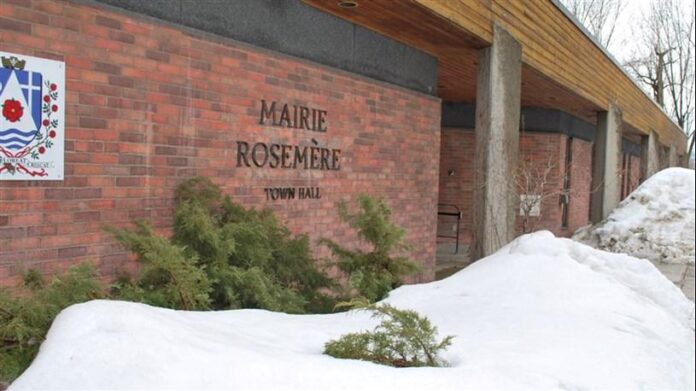
Rosemère marked the beginning of a new municipal chapter this week as the town’s freshly elected officials were sworn in during an evening ceremony on November 10. Held inside the council chambers at Town Hall, the event drew supporters, families, and a number of distinguished guests who gathered to witness the symbolic and administrative start of a new four-year mandate.

At the centre of the ceremony was Marie-Elaine Pitre, former councillor and now the new mayor of Rosemère. Her election ushers in a leadership team that is both gender-balanced and notably diverse in background, an element she emphasized in her remarks thanking residents for their trust.

“The diverse backgrounds, complementary talents and innovative ideas of our team are what make us stand out,” Mayor Pitre said. “Each member brings their own specific expertise to the table and is deeply committed to our community.” She reaffirmed that the council’s priorities will include sustainable development, economic vitality, cultural engagement, strong governance, and support for local businesses, all pursued “with diligence, vision and integrity.”

Meet the New Council

Alongside Mayor Pitre, six councillors were sworn in, forming a balanced team of returning and newly elected officials:

  • Seat 1: Marie-Hélène Fortin — re-elected for a second term
  • Seat 2: Jean-François Gagnière
  • Seat 3: Stéphanie Nantel — re-elected for a third term
  • Seat 4: Annick Lemelin Lagacé
  • Seat 5: Sébastien Jacquet
  • Seat 6: Elmer van der Vlugt

The mix of fresh faces and experienced councillors reflects a continuity of governance while also signaling renewal, an important dynamic at a time when Rosemère continues to navigate issues such as development pressures, environmental stewardship, and community-oriented growth.

The town’s commitment to its guiding principle, “Naturally Responsible Development”, was a recurring theme throughout the ceremony. While the press release outlines no new policy announcements, Mayor Pitre’s emphasis on sustainable planning and community-centred decision-making reinforces a long-standing ethos in Rosemère politics.

Looking Ahead

Residents will get their first look at the council in action later this month. The inaugural meeting of the new administration is scheduled for November 24 at 7:30 p.m. at Rosemère Town Hall (100 Charbonneau Street).

As always, citizens unable to attend in person can follow the proceedings live online via the town’s official streaming platform: ville.rosemere.qc.ca/council-meetings.

With a renewed mandate, a balanced team, and a mayor promising collaborative, principled governance, Rosemère enters its next four years with a clear message: responsible development, thoughtful leadership, and community engagement remain at the heart of its vision.

A Historic Dawn on the North Shore: REM Returns to Deux-Montagnes Amid National Spotlight

0

In what many are calling a once-in-a-generation moment for the North Shore, the City of Deux-Montagnes celebrated the long-awaited inauguration of its new Réseau express métropolitain (REM) branch. After more than four years of anticipation, construction, and pressure from residents and regional leaders, the return of rapid transit to the community became official in a ceremony marked by exceptional political and institutional presence.

The significance of the day was clear from the moment the dignitaries arrived. Among them were Prime Minister Mark Carney, Quebec Premier François Legault, Montreal Mayor Soraya Martinez Ferrada, Deux Montagnes Mayor Denis Martin top executives from CDPQ Infra, and Charles Emond, President and CEO of the Caisse de dépôt et placement du Québec. Federal and provincial ministers, along with MNAs and MPs from the surrounding region, joined municipal leaders in recognizing the enormous impact this project will have on mobility across the metropolitan area.

This was not merely a symbolic return of rail service but the restoration of a vital link for thousands of North Shore commuters. With the REM now officially serving Deux-Montagnes once again, residents can rely on a fully electric, high-frequency service that reconnects them to Montreal and the broader urban network.

A Turning Point for Local Life

For Deux-Montagnes, the resumption of service marks the beginning of a transformational chapter. The town now benefits from two modern, strategically located stations, offering residents a faster and more reliable connection to work, school, and cultural life across Greater Montreal.

Mayor Denis Martin, speaking during the ribbon-cutting ceremony, emphasized what this moment represents for the community.

“The inauguration of the REM marks a major turning point for the future of Deux-Montagnes. With two modern stations in the heart of our territory, we are taking a decisive step forward for our residents’ quality of life. This new mobility link brings our citizens closer to their services, to their activities, and to the entire metropolitan region.”

His remarks captured the broader sentiment shared by many elected officials: that this infrastructure will not only transform daily life today but shape the town’s development for decades to come.

A Catalyst for Growth Across the North Shore

Urban planners and regional development experts have long viewed the REM as a transformative force for communities along its axis. In Deux-Montagnes, expectations are high. Local leaders believe the new service will help ease traffic pressure on major arteries, support neighbourhood revitalization, increase accessibility for families and students and strengthen the overall economic resilience of the region.

With transit-oriented development already underway near key stations throughout the metropolitan area, the North Shore is preparing for similar opportunities. The return of rapid transit is expected to accelerate residential, commercial, and service-sector growth, while also giving residents greener, safer, and more sustainable travel options.

A National Moment for a Local Community

The scale of the inauguration, attended by leaders from the highest ranks of both the federal and provincial governments, underscored just how significant this project is beyond local borders. The REM represents a major investment in modern infrastructure, climate-friendly transportation, and long-term urban planning. For the North Shore, the message was unmistakable: this region is central to Quebec’s future mobility strategy, and its residents are once again fully connected to the heart of the metropolis.

The Beginning of a New Era

As Deux-Montagnes settles into its first full week with the REM back in service, the atmosphere in the community reflects both relief and renewed optimism. For commuters, students, families, and businesses, the return of rapid transit marks more than the reopening of a line, it signals a forward-looking, dynamic, and better-connected future for the entire North Shore.

The REM has finally returned to Deux-Montagnes, and with it, the region steps confidently into a new era of mobility, opportunity, and growth.

The North Shore News volume 21-22

0

The current issue of The North Shore News volume 21-22 published November 21st, 2025.
Covering North Shore local news, politics, sports and other newsworthy events.

Rosemère’s new council sworn in

By Matthew Daldalian – The Laval News

Rosemère’s new City Council (Photo: Matthew Daldalian)

Mayor-elect Marie-Élaine Pitre and six councillors were officially sworn into office Monday Nov. 10 at Rosemère Town Hall, marking the start of a new political chapter for the North Shore city.

Residents, supporters and family members filled the small chamber at 100 rue Charbonneau, where the newly elected officials took the oath of office under the supervision of the city’s clerk.

The event was hosted by Daniel Grenier, the town’s Director of Communications, Public Affairs and Citizen Relations, who framed the night as a symbolic transition for the community. “We are witnessing a turning point for our community, a new breath that is about to shape the decisions guiding the Rosemère of tomorrow,” he told attendees.

Pitre, who previously served as a councillor, was the last to be sworn in after each of her team members. She also took a few minutes to introduce and thank every councillor individually, receiving warm applause from the room.

Pitre speaks on ceremony

Speaking after the ceremony, Pitre said stepping into the mayor’s role still felt slightly unreal.
“Honestly, it’s a bit surreal,” she said. “But I’m very happy because I’m really happy about the team that we put together, and I really feel that everyone here […] is happy about the situation.”

Pitre, who ran alongside the Vision Rosemère slate, said her interest in municipal leadership has always been grounded in a sense of momentum and purpose.
“I’m really passionate about everything I do in life,” she said. “It wasn’t like forced or anything. It was just the right path.”

Rosemère’s new mayor, Marie-Élaine Pitre, signing the official oath-of-office register on Monday Nov. 10 (Photo: Matthew Daldalian)

Her administration now turns its attention to the 2026 budget cycle and several major local files, including the redevelopment of Place Rosemère, climate-resilience planning and citizen services.

While Vision Rosemère holds every council seat, Pitre emphasized the importance of consensus and respectful debate.

One council member is proud

Among the newly elected is Elmer van der Vlugt, councillor for Seat 6, who said the moment brought “a mix of pride, honor and humility.” A Rosemère resident since 2021, he immigrated from the Netherlands and has worked in municipal economics.

He said running for office felt like a natural extension of his attachment to the town. “When I came to Rosemère for the first time, I fell in love immediately,” he said. “It’s a beautiful place… great people, great community.”

Van der Vlugt said he views the upcoming mandate as an opportunity to contribute meaningfully to Rosemère’s future. “I’ve always had this mantra of leaving the world a better place if I can,” he said. “I felt this was a great opportunity to try and do so.”

Looking ahead, he identified several issues that will shape early council discussions, including longstanding debates over the former golf-course land. As an economist, he said financial stewardship will also be critical.

“It’s very important to keep track of the finances, make sure that we have the means to pay for our projects but without increasing the tax burden,” he said.

Elmer van der Vlugt, councillor for Seat 6, said the moment brought “a mix of pride, honor and humility.” (Photo: Matthew Daldalian)

Van der Vlugt added that his personal priority is expanding active mobility infrastructure, an interest rooted in his Dutch background.

“Cycling is in my blood and DNA for sure,” he said. “I’d really like to accelerate where I can and help bring a fresh new view with different experiences from all over the globe.”

The ceremony closed with families and guests gathered for photos and small celebrations. The new council will hold its first official meeting later this month.

Riding the REM’s new Deux-Montagnes branch: A first-day look

Riders huddled to the new Deux-Montagnes station for a free-fare weekend

The newly reopened Deux-Montagnes REM station (Matthew Daldalian, North Shore News)

By Matthew Daldalian

Saturday Nov. 15, the line to enter the brand-new REM station snaked around the building all morning — long, cold, but moving quickly.

The REM, or the Réseau Express Métropolitain, is a fully automated, electric light-rail system that runs driverless trains on a dedicated right-of-way. It’s designed to move riders every few minutes, making it closer to a rapid-transit network than the old commuter rail it replaces.

Staff handed out warm drinks, paper “passports” to stamp at each stop, and small cardboard REM trains for kids to assemble. It felt less like the launch of a transit line and more like a community event.

I joined the crowd at Deux-Montagnes, boarding one of the first north-shore trains to head all the way to downtown Montreal. For the first time since the EXO line shut down in 2020 when CDPQ Infra, a primary contractor for major public infrastructure projects, took over the former line and closed it for conversion to the REM.

Now, rail service is back and people showed up to test it out.

‘We’re here just for the opening’

One of the first riders I met wasn’t local.

For Alex Reyes, who travelled from New York with his wife specifically for the opening, the moment felt rare. “We got here just in time,” he said.

Alex Reyes, who travelled from New York with his wife for the opening of the REM’s Deux-Montagnes branch, stands outside the station on Saturday morning. (Matthew Daldalian, North Shore News)

Reyes said new rapid-transit projects are unusual on the U.S. east coast. “There isn’t really much new transit popping up,” he added, noting the most recent major project was New York’s Grand Central Madison concourse in 2023.

He said Montreal’s driverless trains and rebuilt stations are impressive adding he was intrigued by the Île Bigras stop.

Inside the station, families came close against the glass to watch the first automated trains glide in, silent except for the electric hum. The platform screens counted down the next departures: two minutes, then one.

The ride

Once on board, the train felt airy and bright, not packed until further down the lane. Kids sat on parents’ laps, some riders filming, others flipping through their stamp passports.

“I really like how quick it is and that it’s automated,” Reyes told me after we rode. “And the fact everything is brand new, that’s a lot of fun.”

The REM’s technology is hard to ignore: driverless trains, platform screen doors, and service every few minutes once the system is at full frequency. For now, the Deux-Montagnes branch runs on a restricted schedule, with testing continuing ahead of the Anse-à-l’Orme opening next spring.

Transit agents guide riders through the fare gates inside Gran-Moulin station as the REM launches its extended branch. (Matthew Daldalian, North Shore News)

The Deux-Montagnes branch adds 14 stations and links with the orange, green and blue métro lines, as well as the Mascouche commuter rail line. It introduces several new stops that didn’t exist on the former EXO route it replaces.

The trip to Central Station took under an hour — give or take 40 minutes. The ride was smooth, though not flawless; a brief slowdown approaching Côte-de-Liesse prompted a few grumbles.

After previous reporting on overcrowding and shutdowns on the South Shore branch, riders told me they expected “hiccups.”

Still, on opening day, nobody seemed genuinely bothered.

Locals return to rail — at last

At the entrance, I met Lisa Mailhot, bundled up with her young son, both smiling despite the wind.

Mailhot said her family relied heavily on the old commuter train and felt the absence. “My family is in Montreal, so we used it a lot,” she said of the old line. “We were really excited to see [the REM] running.”

Lisa Mailhot and her son pose outside Deux-Montagnes station after testing the new REM service on opening day. (Matthew Daldalian, North Shore News)

Mailhot, who came with her young son, said the modernized platforms and signage looked promising. “Honestly, I haven’t taken it yet, but when I look at it, it’s impressive,” she said. “It looks well-indicated. It looks good.”

‘There’s nothing around here’

Not everyone lining up was focused only on the train.

Michelle Archambault, a nearby resident, said the REM’s return fills a mobility gap, but the neighbourhood around the terminal is still bare.

The elderly North-Shorite said the new trains restored an important connection, but the neighbourhood still lacks community spaces. “In general, I always go to Laval because there’s nothing around here,” she said.

Archambault said she wants Rosemère and Deux-Montagnes to grow alongside the new infrastructure. “More activities would help,” she added.

A view from the tracks

From inside the train, the REM delivers what its builders promised: a quiet, modern ride with smooth acceleration and crisp, bright interiors.

But on the platforms, opening day revealed some early realities. Crowds thickened as the morning went on, with families packing into cars as the line approached the busiest stations.

And for now, the newly opened branch still operates on limited hours, with service to Deux-Montagnes ending at around 9:30 p.m. as testing continues.

Passengers crowd into one of the first REM trains departing from Deux-Montagnes during the free-fare opening weekend. (Matthew Daldalian, North Shore News)

The excitement of opening day remained high, but the system now faces pressure to deliver consistently after years of delays and criticism directed at CDPQ Infra.

Despite that, the trip into downtown was undeniably fast: no traffic, no transfers, no big delays beyond minor slowdowns. When the entire system is fully operational, that speed will matter even more.

A new chapter begins

Stepping off at each station, Reyes and his wife immediately head for their next stamp.

“This is just fun,” he said. “It’s cool to see something new actually open.”

The sentiment was shared up and down the platforms: relief, excitement, curiosity — and for many, a sense of getting back a connection they lost years ago.

The next few months will reveal how well the REM holds up beyond its opening-day crowds.

The North Shore News volume 21-21

0

The current issue of The North Shore News volume 21-21 published November 7th, 2025.
Covering North Shore local news, politics, sports and other newsworthy events.

Steady Hands, Quiet Shifts: How the North Shore Chose Continuity in the 2025 Municipal Elections

0

By Dimitris Ilias

On Sunday, November 2, 2025, the citizens of Quebec’s North Shore cast their ballots — or in some cases, simply watched the results unfold — and the message was clear: the new order is… much like the old one. Across the region, the mayors who stood for re-election held their ground; in two communities, the transition of power happened not at the ballot box, but at the nomination desk. For volunteers, community organisers and cultural stakeholders, this result offers both reassurance and an invitation to act — the familiar landscape remains, but the time for partnership has arrived.

Boisbriand — Beaudette’s return, Cordato’s comeback attempt falls short

In Boisbriand, incumbent mayor Christine Beaudette secured a second mandate with a “majority solid” victory, according to post-election coverage.

Her predecessor, Marlene Cordato, attempted a return but fell short. The result says two things: voters preferred continuity rather than a return to past leadership, and Beaudette’s first-term approach — emphasizing citizen-consultation and infrastructure projects — resonated sufficiently to win affirmation. Now, the challenge becomes turning that mandate into action: whether her second term accelerates change, or simply maintains pace, is what the months will tell.

Saint-Eustache — Leadership hand-off without a contest

Over in Saint-Eustache, the biggest story was no story: outgoing mayor Pierre Charron did not run, and his party’s candidate Marc Lamarre was elected by acclamation. There was no competitive mayoral race, which means the voters didn’t have to choose between options — the choice was made by default. The result offers seamless continuity, but also raises questions about civic engagement: how strong is the public debate when leadership changes hands without a campaign? For community-driven groups, the benefit lies in knowing the administrative team remains closely aligned with past governance — less risk, less upheaval.

Deux-Montagnes — Martin returns unchallenged

At Deux-Montagnes, the story mirrored Saint-Eustache’s in another key sense: mayor Denis Martin and five councillors were returned by acclamation. No opponent filed. The absence of competition may signal satisfaction with the status quo — or simply a reluctance to challenge it. Functionally, local non-profits, volunteer associations and schools can breathe easier knowing the municipal leadership remains consistent. But structurally, fewer voices in the race means fewer questions asked, fewer debates held, and perhaps fewer innovations on the horizon.

Blainville — Poulin’s steady hand keeps the wheel turning

In Blainville, incumbent mayor Liza Poulin was re-elected, as reported by provincial coverage. The city, growing rapidly, faces mounting pressure on transit, housing and community services; Poulin’s win signals that voters opted to keep the experienced navigator at the helm rather than bring in a new one. For the many cultural-education-volunteer enterprises in the region — such as those you work with — that means predictable governance and a stable municipal relationship.

Sainte-Thérèse — Another vote for the familiar

Sainte-Thérèse followed the pattern of reaffirmation: mayor Christian Charron retained his position. According to Élections Québec listings, his candidacy was successful, maintaining the status quo. The result underscores that in a time of shifting broader politics, local voters often prefer what they already know and trust.

What this means for the North Shore

The North Shore chose stability. Familiar mayors and systems stay in place, giving community and arts programs a steady environment to grow.

But democracy feels quieter—too many races went uncontested. It’s a call for citizens to re-engage and keep debate alive.

For leaders like Christine Beaudette and Liza Poulin, renewed mandates mean a chance to deliver more than continuity. For everyone working in culture and education, it’s time to build on what works and turn stability into progress.

Rosemère Elects Marie-Élaine Pitre Mayor, Ending Eric Westram’s Eight-Year Run

0

Voters in Rosemère chose a new direction in Sunday’s municipal general election, electing Marie-Élaine Pitre as mayor and filling all six council seats for a four-year mandate through 2029. The municipality published preliminary results naming the new mayor and council; under Quebec’s election law, these results remain subject to official verification and the short window for any judicial recount requests.

Who was elected

The town’s preliminary list of elected officials is as follows: Mayor: Marie-Élaine Pitre; Seat 1: Marie-Hélène Fortin; Seat 2: Jean-François Gagnière; Seat 3: Stéphanie Nantel; Seat 4: Annick Lemelin-Lagacé; Seat 5: Sébastien Jacquet; Seat 6: Elmer Van Der Vlugt. The municipality indicated these are preliminary and will be formalized after legal delays expire.

A change at the top

Pitre’s election closes the era of Éric Westram, who first won the mayoralty in 2017 and secured re-election in 2021. Westram previously served three terms as a councillor and sat on the Thérèse-De Blainville MRC council in his capacity as mayor.

How we got here

Pitre entered the mayor’s race after serving on council and breaking with the incumbent team in 2024 to sit as an independent councillor, citing concerns about the council climate. In May 2025 she unveiled a full slate of six candidates under her municipal party Vision Rosemère – Équipe Marie-Élaine Pitre, authorized by Élections Québec on May 9, 2025. During the official campaign launch in October, she emphasized five priorities: responding to the housing and demographic crunch; focusing on redevelopment over sprawl; revitalizing the Place Rosemère commercial hub while protecting the tax base; making City Hall more responsive; and integrating climate adaptation, active mobility and school-zone safety into local planning.

What Pitre’s victory could mean

While detailed vote tallies had not yet been formally proclaimed at press time, Pitre’s win signals an electorate leaning toward in-town renewal and process efficiency over expansion. Expect early files to include: next steps on redevelopment sites; a plan to stabilize commercial tax revenues amid shifts at Place Rosemère; and a package of mobility and climate-resilience measures tailored to school routes and neighbourhood streets. Those themes were central in Pitre’s platform and echoed throughout the late-campaign messaging.

Who is Marie-Élaine Pitre?

Municipal experience. Pitre served as a Rosemère councillor before winning the mayoralty; in 2024 she left the incumbent mayor’s team to sit as an independent.

Party leadership. Founder and leader of Vision Rosemère – Équipe Marie-Élaine Pitre, an Élections Québec-authorized municipal party (authorization May 9, 2025).

Professional profile & education. Public bios describe experience in corporate sustainability and management studies; her LinkedIn lists roles with Groupe ADF and management training at HEC Montréal. (As with all social-profile claims, these details are self-reported.)

Public positioning. In interviews and local coverage during the 2025 race, Pitre framed her candidacy around “redevelop rather than sprawl,” merchant-friendly revitalization of Place Rosemère, quicker municipal processes, and climate-aware urban planning that improves day-to-day safety for residents.

What’s next procedurally

General municipal elections in Quebec are held every four years on the first Sunday of November; for 2025 that date was November 2. Rosemère’s preliminary results are posted for public information; the official proclamation follows statutory verification and the short period in which a judicial recount may be requested. Residents can consult the town’s results hub and Élections Québec’s election pages for formal updates as they are posted.

Weather

Rosemère
overcast clouds
9.1 ° C
9.6 °
8.3 °
70 %
2.6kmh
100 %
Fri
12 °
Sat
11 °
Sun
12 °
Mon
14 °
Tue
11 °