The current issue of The North Shore News volume 16-39 published December 25th, 2020.
Covering North Shore local news, politics, sports and other newsworthy events.
(Click HERE to read the paper.)

The current issue of The North Shore News volume 16-39 published December 25th, 2020.
Covering North Shore local news, politics, sports and other newsworthy events.
(Click HERE to read the paper.)


The Saint-Eustache Hospital Center Volunteers Association donated $ 25,000 to the Fondation Hôpital Saint-Eustache (FHSE), despite the pandemic. This amount will contribute to the 2020 FHSE campaign aimed at improving the health care and services offered by the hospital, in addition to enabling the implementation of innovative projects in the Laurentians region.
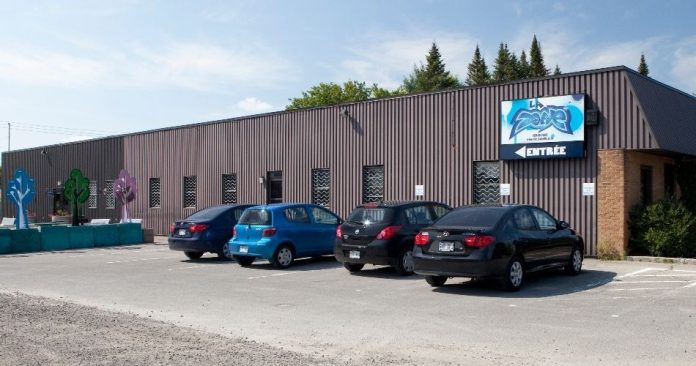
The money raised comes mainly from the profits of the gift shop La douce pensée located at the entrance of the Saint-Eustache Hospital. Run exclusively by a team of volunteers, the store has had to temporarily close its doors since March 16 due to the pandemic. In addition, the many fundraising activities planned during the year by the Association could not take place. Until the non-profit organization resumes its fundraising activities, its volunteers intend to continue their efforts by getting involved in a different way, to maximize the donations made annually to the Foundation. The Laurentian Integrated Health and Social Services Center saluted the Saint-Eustache Hospital Center Volunteer Association for its generous contribution which makes a real difference.

Health Canada has already recalled more than 120 hand sanitizers, which prompted the Order of Chemists to say that a review of the law could have avoided this mess.
To cope with the explosion in demand, Health Canada has temporarily relaxed its rules for the production of hand sanitizers.
The easing opened the door to companies unlicensed by Health Canada and to the use of non-pharmaceutical grade alcohol sources, in severe supply shortages.
Health Canada withdrew 121 hand sanitizers from the market between June 1 and November 27 due to the presence of unauthorized ingredients, for labeling or packaging issues. As of December 8, it had opened 741 investigations into potential non-compliance for the same reasons.
Since some products contained only 11 to 18% alcohol, the Ordre des chimistes du Québec (OCQ) reacted by opening an investigation into the production of hydroalcoholic gels, for which a progress report should be known in February. .
Concerns
“The number of recalls concern us for the protection of the public. We think we have taken all the necessary measures, that we will not transmit the disease, but we have a false sense of security while using the product. It challenges us,” announced to the media OCQ president Michel Alsayegh.
According to Alsayegh, even if a disinfectant has a sufficient alcohol content of 60 to 70%, it is not a guarantee of quality. “We have to make sure that there is no addition of a product that is harmful to health or that interacts with another. We are talking about pure and simple chemistry here. The type of plastic in the container should be suitable for what you put in it, and not look like a water bottle. There have been cases of poisoning.
Law update
Since the start of the investigation, Mr. Alsayegh indicates that the order has been contacted by both employees concerned to see how production was organized in their factory and by manufacturers who have requested advice. “There is a way to handle chemicals. It can be dangerous, especially in terms of flammability and fumes. “
The president of the OCQ is pleading for an update of the law on chemists, which dates from 1964.
” We are not asking for a chemist behind each bottle. But if in Quebec, Health Canada had made sure to give licenses to companies supervised by chemists, giving their seal of approval and being accountable, we would have ensured that the products leaving the factories were flawless. There would have been no recalls.

The Integrated Health and Social Services Center (CISSS) des Laurentides wishes to inform the population that the vaccination campaign against COVID-19, which will begin shortly, is the priority of the organization from now on and for the next few months.
CISSS teams are currently highly active in preparations for the campaign to be ready to vaccinate, the precise delivery date of which will be confirmed shortly. To work on this planning, a new internal coordination structure was put in place to oversee the logistics of the vaccination campaign in the Laurentians.
Ms. Caroline Chantal will act as director responsible for the COVID-19 vaccination file. In close collaboration with Dr. Danielle Auger, medical consultant at the Department of Public Health, they will be assisted by a strategic committee made up of representatives from several departments of the CISSS des Laurentides. This committee will analyze, on a regular basis, the various issues surrounding the vaccination campaign and ensure its proper functioning.
“With all the challenges generated by COVID-19, ending the spread of the virus is an essential priority for us and the vaccination campaign is our organizational priority. Even if several orientations related to the progress of the vaccination campaign remain to be confirmed, we are already in action. Thus, when the time comes to start vaccination, we will be effective from the start, while maintaining our efforts to provide quality care and services to the population,” explained Rosemonde Landry, President and CEO of the CISSS des Laurentides.
In addition to sharing this organizational priority, the President and CEO is committed to sending regular communications to the population and providing access to the latest information from the santelaurentides.gouv.qc.ca website. Thus, Laurentians will be able to stay informed at all times of the progress of the vaccination campaign, which will take place over several months. “I fully understand the public’s eagerness to know where and when they can get the vaccine. What we do know so far is that vaccination is expected to start by the end of December. It should be remembered that the doses will be limited at the start and distributed gradually, to the priority groups identified by the Committee on Immunization of Quebec, that is to say the vulnerable people and with great loss of autonomy who reside in the residential centers long-term care (CHSLD) or in intermediate and family-type resources (RI RTF) and workers in the health and social services network in contact with patients,” said Rosemonde Landry.
Finally, the President and CEO reminds everyone that even if vaccines will be available shortly, the population of the Laurentians must not relax their rigor when it comes to respecting health measures. “Continue your efforts to protect yourself and the most vulnerable!”

Nova Bus, leading North American transit bus manufacturer, and NSE Technical & Logistics Services, a growing company offering warehousing, transportation and repair services, announced their strategic geographic rapprochement with an investment in the Innoparc Albatros in Saint-Eustache.
With the support of the City of Saint-Eustache, which developed this new business district focused on sustainable development and a true hub for cutting-edge technologies on the North Shore of Montréal, the two companies will work closely together in the same facilities. Upon completion of the construction of the new infrastructures in the fall of 2021, Nova Bus, whose investment represents $9 million dollars, will occupy an 80,000 square foot space that will allow the development of prototypes. For its part, NSE Technical & Logistics Services will occupy more than 135,000 square feet, allowing it to carry out its operations of reception, storage and shipping of parts and state-of-the-art equipment for major clients in the transportation sector such as Nova Bus.
“The partnership between Nova Bus and NSE is a strong example of the power of collaboration to drive innovation,” said Martin Larose, Vice President and General Manager of Nova Bus. “With the opening of this facility, we not only have greater control and focus on improving supply quality for our buses, but we continue to proudly invest in the future of zero emission transit solutions through the augmentation of innovation and infrastructure.”
“The last few months have been very significant for the company’s long-term strategy and the adventure we have been living for 3 years now. Nova Bus occupies a particular place in our history and we thank them very much for their continuous confidence Our partnership is based on common and fundamental pillars such as collaboration, continuous improvement, innovation and, of course, a common vision between the leaders for the realization of innovative and ambitious projects”, said Benoit Hudon, President & CEO of DRAKKAR Aerospace & Ground Transportation.
“The proximity with Nova Bus lies at the heart of our decision to settle close to this important customer, combined with optimization objectives which will enable us to widen our offer of services, to ensure a better quality of supply and to propose to all our customers optimal “just-in-time” delivery solutions”, added Jean-François Paradis, Business Unit Director at NSE Technical & Logistics Services.
“We are pleased to collaborate with NSE on this project,” said Vincent Plante, Vice President of Operations at Nova Bus. “This partnership and proximity will allow operational efficiency and a lean approach in the development of prototypes.”
Nova Bus, which collaborates with NSE Technical & Logistics Services since its very beginnings, is committed to innovate, develop, and constantly improve its products and processes in order to reduce pollution and waste in all the aspects of its activity.
About Nova Bus
Nova Bus is a leading provider of sustainable transportation solutions in North America. Its portfolio includes electric buses and hybrid buses, high-capacity vehicles and integrated intelligent transport systems. As part of its Electro Mobility strategy, Nova Bus is moving forward with the electrification of key vehicle components to reduce fuel consumption and emissions. Nova Bus is part of the Volvo Group.
About NSE Technical & Logistics Services
Based in Laval, Quebec, NSE Technical & Logistics Services is an affiliate company of DRAKKAR Aerospace and Ground Transportation. NSE Technical & Logistics Services aims to substantially reduce turnaround times (TAT) related to kitting, sub-assembly and repair management. The company supports its customers with a complete control tower, a truly revolutionary technology for the world of logistics services, which integrates the customer interface, carrier management, warehousing, repair and manufacturing assistance. NSE Technical & Logistics Services leverages European and Canadian best practices in technology, processes, operations management and customer orientation, making it a partner of choice in the manufacturing industry.

A senior’s residence had to be completely evacuated Saturday morning in Sainte-Thérèse, in the Laurentians, after a carbon monoxide leak.
In all, 51 residents with reduced mobility and ten employees of the Manoir Joie de vivre had to be taken care of around 9:30 am by the police and firefighters.
After ten minutes outside, the evacuees were able to wait inside the Saint-Gabriel school gymnasium, located just in front of the residence.
The Fire Department of the City of Sainte-Thérèse said that a person who lives in the residence had to be hospitalized “for evaluation” during the operation.
This ultimately lasted a little over four hours. At the start of the afternoon, Énergir’s teams were able to resolve the problem that stemmed from a fault in the heating system.
A little before 2:30 p.m., everyone was able to return to their room, added the firefighters.
They wanted to thank the paramedics who sent one of their assistance dogs to the scene to provide psychological support to residents during the wait.

An octogenarian lost his life on Friday evening after the fire at his residence in Pointe-Calumet, in the Basses-Laurentides.
The Régie de police du Lac des Deux-Montagnes explained that the fire first broke out in a temporary shelter, a little after 9 p.m., before spreading to the house.
The firefighters then found the owner unconscious in the rubble of this residence on 25th Avenue. He was transported to Saint-Eustache Hospital, where his death was unfortunately pronounced.
No one was injured in the blaze, police added.
As of Saturday morning, they were still on the scene trying to determine the causes of the fire.
“There is no indication that this is criminal in nature. Everything suggests that it was accidental,” said Jean-Philippe Labbé, inspector of criminal investigations at the regional police force.

By Brianna Fasoli*
There is no doubt that the holidays this year will be quite different. It is as if that is all anyone seems to say these days isn’t it? Talk of the new normal bombarding us at our every turn. Everywhere we look a constant reminder of what can’t be popping up to bring us down. During the next few minutes you take to read this article however, I would like to talk about something that we seem to all need a little extra of these days: holiday spirit.
According to most Christmas movies, cheesy or otherwise, holiday spirit is an abstract yet integral part of Christmas. It’s a type of magic that lives only in our hearts. Perhaps they aren’t too far off, especially this year. Maybe, even though this year will be different, even though this horrible virus seems to be doing all it can to keep us apart, maybe we’ll emerge from it closer to one another in the end.
I noticed, and you possibly did as well, that around early November it seemed as if there was some kind of unanimous yet unspoken idea dancing in the air, like sugar plum fairies. Grocery stores and houses alike were decked from head to toe, or perhaps roof to foundation, in cheerful holiday decorations weeks ahead of usual. Everyone appeared to feel as though a little bit of holiday spirit ahead of schedule could do our bruised morals some good.
I don’t know about you, but I think that was a splendid idea! Just the bright lights and nostalgic decorations are enough to engulf us in hope for brighter days ahead. The same can be said in my opinion even for people who don’t celebrate Christmas; sometimes festive decorations can be enough to put a smile on someone’s face.
During this holiday season it is more important than ever to be kind and compassionate to those around us, as we never know what they are going through on the inside. That’s why just this silent collective effort to spread holiday spirit is so important and so touching to me. If we can come together to do this without proper organization, it gives me hope that we’ll be able to come together on a much larger and more vocal scale in the future. This holiday season we have to continue to try and keep each other safe and as much as it pains me to say this, that means finding creative solutions for ‘seeing’ our loved ones with as little contact as possible. We must do this so that all we are spreading is holiday cheer and nothing else.
Happy Holidays to All!
*Brianna Fasoli is a grade 10 student at Rosemere High School and a Saint-Eustache resident

Since last September, participants in the Work Integration program for people with intellectual disabilities, an autism spectrum disorder, or a physical impairment (DI-TSA-DP) regularly go to the regional warehouse of the Center de santé et de services sociaux (CISSS) des Laurentides to help with the logistics and preparation of orders of personal protective equipment that are worn in the health and social services sector during this pandemic period.
Thus, the 13 trainees of this program go, in small groups, two to three times a week to the regional warehouse. The success of this initiative will soon allow the opening of a fourth day of internship per week. With the increased logistical demands due to the pandemic, the regional warehouse has emerged as a suitable environment for group internships with people with intellectual disabilities, autism spectrum disorder or physical disabilities.
Indeed, the warehouse activities associated with the assembly of protective equipment for home care nurses, the preparation of disinfectant wipes, or the filling of disinfectant bottles are interesting tasks and responsibilities for customers. of the DI-TSA-DP Work Integration program. More specifically, people with an intellectual disability, an autism spectrum disorder or a physical disability easily progress with simple and repetitive tasks. For them, these responsibilities are rewarding, motivating, and accomplished with both thoroughness and pleasure. “This group course takes place in the context of the pandemic in which everyone’s contribution is appreciated and makes a difference. Interns are proud to work in the warehouse and to lend a hand to ensure the protection of the public and our staff. They are invaluable in operations and provide a pleasant working atmosphere and climate in the regional warehouse”, said President and CEO of the CISSS des Laurentides, Ms. Rosemonde Landry.
Currently, the team of the Work Integration program of the CISSS des Laurentides works in partnership with more than 200 employers in the region to promote the development of the employability of people with intellectual disabilities, on the spectrum of autism or physical impairment. In total, nearly 550 people work in various organizations, businesses and establishments and help increase the productivity of these workplaces. “Just as we do at the CISSS des Laurentides, we want businesses in the region to continue to develop the reflex of thinking about our interns when the tasks allow it, or when they have excess workload that is difficult to integrate into their current operations. The integration of these people into society changes their lives and brings them such a great sense of pride and accomplishment. Businesses are also the winners,” says Ms. Landry. Companies interested in a partnership project are invited to contact Ms. Carole Gravel, Work Integration DI-TSA-DP program manager at the following email address: carole_gravel@ssss.gouv.qc.ca.

Dimitris Ilias
It seems that lately all manners of scammers, spammers and various nefarious cyber creatures have been increasing their attacks on us. I have been bombarded daily by phishing emails that announce that I won something from COSTCO or Amazon etc. My cell phone has been flooded by phone calls from scammers pretending to be government agents asking for money or the swat team will come knocking at your door.
Spam, Phishing, Scams, and fraud
Spam is any unsolicited commercial electronic message. It is often a source of scams, computer viruses and offensive content. Canada’s antispam legislation (CASL) is in place to protect Canadians while ensuring that businesses can continue to compete in the global marketplace.
Phishing is a general term for emails, text messages and websites fabricated and sent by
criminals and designed to look like they come from well-known and trusted businesses, financial institutions, and government agencies to collect personal, financial and
sensitive information.
Scams and Fraud include false, deceptive, misleading or fraudulent acts. The Canadian Anti-Fraud Centre is the central agency in Canada that collects information and criminal intelligence on such matters as mass marketing fraud (e.g., telemarketing), advance fee fraud (e.g., West African letters), tax scams (calls purporting to be from the Canada Revenue Agency), Internet fraud and identification theft
complaints.
The pandemic effect
The global pandemic has forced a lot of Canadians to venture increasingly in the cyberworld for a multitude of different reasons. From shopping to zoom videos and from games to tv people are more and more glued on various screens of different sizes. Statistics Canada has conducted surveys since the beginning of the pandemic to see how Canadians are faring during these challenging times. Just over 4 in 10 respondents reported that they were spending more time on social media and messaging services (41%) since the onset of the pandemic, while 3% spent less time. Young Canadians aged 15 to
34 (57%) were most likely to have increased their use of social media and messaging services, while seniors aged 65 and older (18%) were the least likely to have done so. As reported by the CPSS earlier this summer, almost half of Canadians (46%) have increased their use of free streaming video services
such as YouTube. The increase was the most pronounced among young Canadians, with just over two-thirds of 15 to 34 year olds (68%) reporting increased use of online video streaming services. Canadians also reported increased use of free online information services and online educational services since the onset of the pandemic.
One-third of Canadians have experienced a phishing attack The pandemic did not diminish the volume of cyber incidents faced by Canadians, and led to some new, targeted attacks directly related to
information about COVID-19. Just over 4 in 10 Canadians (42%) experienced at least one type of cyber security incident since the beginning of the pandemic, including phishing attacks, malware, fraud and hacked accounts.
Just over one-third of respondents received phishing attacks since the start of the pandemic, a specific type of spam targeting individuals with the intent of defrauding the recipient, while 14% of respondents reported at least one phishing attack related to COVID test results, a potential cure for the virus or about the Canada Emergency Response Benefit.
Just over one-third (36%) of those reporting at least one cyber security incident experienced a loss as a result of the incident. Among those who experienced a loss, the most common were a loss of time (87%), followed by loss of data (13%) or financial loss (13%). Just under one-third of Canadians that experienced a cyber security incident during the pandemic reported the incident. Canadians were most likely to report the incident to the company through which the incident occurred (11%) or to a credit card company or other financial institution (12%) in the event of payment card fraud or financial loss. Approximately, 5% of individuals that experienced an incident reported it to an authority such as the police or the Canadian Centre for Cyber Security.
Online protection
Although most Canadians maintained the same cyber security measures as before the pandemic, some age groups reported heightened awareness of privacy. This shift was most pronounced among younger Canadians, with three-quarters (75%) of those aged 15 to 34 increasing or maintaining their usage of multi-factor authentication, compared with less than half of those aged 65 and older (39%). Just under one-half of young Canadians (47%) maintained or increased their purchases of new or additional security software. Meanwhile, 28% of seniors did. Just over one-fifth (21%) of Canadians said they
had increased restricting or refusing access to their geographic location or refused the use of personal data for advertising purposes since the onset of the pandemic. Canadians also took specific steps to protect themselves when they were shopping online and almost two-thirds have helped someone navigate digital technologies during the pandemic
Sainte-Thérèse guidance
Municipalities have also embarked on the fight against cybercrime with many workshops and
info sessions and an emphasis on the elderly. The City of Sainte-Thérèse is doing its part by
also informing its citizens via an online workshop and giving them the tools for recognizing
and protecting from phishing. This workshop is helping people to identify phishing and counterfeits in order to protect themselves on the Web. The topics are: Understand the objectives of phishing, know the legal remedies, identify fraudulent emails and identify counterfeit websites.